
Why I Choose to Be a Parent, Not Just a "Friend"
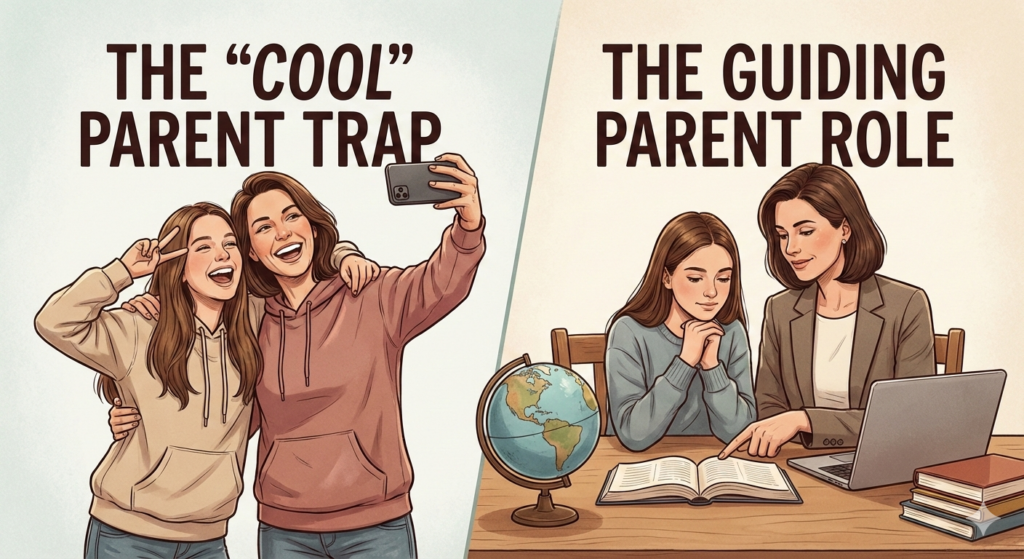
In modern parenting, there is a celebration of the “cool parent.” We are constantly told that we should be best friends with our children to ensure openness and easy communication. The goal is to avoid the generation gap and be the parent they want to hang out with.
But lately, I’ve been questioning this trend. While emotional bonding is essential, I believe parents must remain parents.
If we strive too hard to be just another friend in our child’s circle, we risk losing our rightful role as guides, protectors, and moral anchors.
The “Cool Parent” Trap
There is a specific danger in blurring the lines. I recently heard of a situation that perfectly illustrates this problem. A mother asked her daughter why she returned home late from a party, expecting an explanation. Instead, the daughter retorted:
“Mom, why are you behaving like a mother? I thought we had decided we are friends.”
This is a wake-up call for all of us. When we strip away the title of “Mother” or “Father” to put on the badge of “Friend,” we lose the standing to ask the hard questions.
The reality is simple: Your child can have fifty friends. They can find friends at school, online, and in the neighborhood. But they only have one set of parents. If you step down from your role to become a peer, your child is effectively left without a parent.
The Consequences of Blurring Boundaries
We often parent by imitation. We see others being casual and think, “Everyone else is doing it, so I should too.” We want to fit into their world—attending their parties, using their slang, and acting casually.
But when we do this, the boundaries dissolve, and with them goes the child’s sense of security.
Confusion of Roles: When the hierarchy disappears, children stop seeing us as authority figures.
Loss of Respect: If we act like peers, we are treated like peers—which means the respect traditionally accorded to parents vanishes.
Reduced Resilience: Real inner strength comes from structure and guidance. “Borrowed freedom” without discipline often leads to children who struggle with self-control.
Bringing Back Maryada (Respectful Boundaries)
We need to stop viewing “boundaries” as a negative word. In our culture, this is the concept of Maryada—not restriction based on fear, but a structure based on dignity and strength.
Traditional parenting understood this well. There was a respectful distance that didn’t negate love; it enhanced it. Children could speak openly, but they understood that the parent was the captain of the ship.
We can be loving, emotionally present, and supportive without surrendering our authority.
The Distinction: Friend vs. Parent
| Feature | The “Best Friend” Role | The Responsible Parent Role |
| Primary Goal | To be liked, to have fun, and to validate feelings. | To guide, to protect, and to build character. |
| Power Dynamic | Equal Peers: “We are on the same level.” | Healthy Hierarchy: “I am your guide and anchor.” |
| Reaction to Mistakes | Often ignores or minimizes faults to keep the peace. | Holds the child accountable to teach responsibility. |
| Boundaries | Blurred or non-existent; fosters dependency. | Clear and consistent (Maryada); fosters security. |
| Conflict Style | Avoids hard conversations to prevent awkwardness. | Willing to be “unpopular” to enforce necessary rules. |
| Long-Term Outcome | The child feels “cool” but lacks emotional resilience. | The child feels safe, disciplined, and self-assured. |
The Bottom Line
Friendship provides validation, fun, and peer understanding. Parenting provides direction, accountability, and a sense of right and wrong that a friend can never provide.
It is time we stop trying to be the “cool friend” and start embracing the role we were given. Let’s give our children the one thing their friends can’t give them: Parenting.